
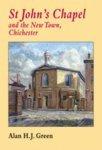
Book Summary
St John's Chapel, in Chichester, is a rare survivor-a Georgian proprietary chapel which has largely escaped the attentions of modernisers. By the noted architect James Elmes, it is listed Grade I and, no ordinary place of worship, it was built and run as a commercial venture. Although firmly part of the Church of England, it had no parish to fund it and its trustees had to pay dividends to the share-holders as well as the minister's salary. Keeping the 'business' afloat up to its closure in 1973 proved to be a constant struggle, as this very entertaining new narrative account reveals. The Black Friars' Friary had occupied an important site in the south-east of the city which became the grounds of a large mansion house. In the early 19th century it came into the possession of Major General John Gustavus Crosbie. In 1808 he put up the entire Black Friars site for sale by auction, intending to create a New Town of grand houses for the professional classes. To this end he put restrictive covenants in the deeds, forbidding 'unpleasant trades'. Now, Alan Green has provided the first account of the history of this part of Chichester. His important new book is detailed, comprehensive and impeccably researched. ST JOHN'S CHAPEL, in Chichester, is a rare survivor ... a Georgian proprietary chapel which has largely escaped the attentions of modernisers. By the noted architect James Elmes, it is listed Grade I and no ordinary place of worship, it was built and run as a commercial venture. Although firmly part of the Church of England, it had no parish to fund it and its trustees had to pay dividends to the shareholders as well as the minister's salary. Investors included John Marsh, that most prolific Georgian composer, who was also chapel warden until his death. Keeping the 'business' afloat up to its closure in 1973 proved to be a constant struggle, as this very entertaining new narrative account reveals. The Black Friars' monastery had occupied an important site in the south-east of the city which became the grounds of a large mansion house. In the early 19th century it came into the possession of Major General John Gustavus Crosbie, who also owned much land to the south of Chichester and was a promoter of the Chichester Canal. In 1808 he put up the entire Black Friars site for sale by auction, intending to create a New Town of grand houses for the professional classes. To this end he put restrictive covenants in the deeds, forbidding 'unpleasant trades'. The New Town provided the ideal site for St John's and many invested in both projects. Now, Alan Green has provided the first account of the history of this part of Chichester. His important new book is detailed, comprehensive and impeccably researched. He tells the entire story of the New Town and of St John's; including architecture, construction, intrigues, personalities and the Trustee's perpetual battle to keep the chapel open. He also explores and explains not only the people who came to live there but also the various businesses, including the Corn Exchange, which, despite Crosbie's covenants, managed to become established in Newtown.
Book Details
| Book Name | St John's Chapel And The New Town, Chichester |
| Author | Alan Green, Alan H. J. Green |
| Publisher | History Press (Jan 2005) |
| ISBN | 9781860773259 |
| Pages | 192 |
| Language | English |
| Price | 1502 |