
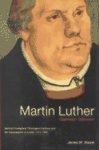
Book Summary
The Protestant ruling classes of the pre-World War I German Empire took for granted that Martin Luther was the greatest of all German men. In the early twentieth century, however, Luther came under attack from Catholics, liberals, and socialists, groups who became the governing coalition of the Weimar Republic after Germany's defeat in World War I. Protestant conservatives struggled to win back power in the Weimar years -- and one object of their battle was to restore the veneration of Martin Luther. Theological trend-setters after the war were dogmatic or systematic theologians. Whether men of the right like Karl Holl or men of the left like Karl Barth, they wanted to return to Luther's fundamental Reformation theology and to justification through faith alone. In the mid-1920s, however, Barth saw the dangers of Lutheran theocentrism wedded to German nationalism and moved towards a more Reformed Christology and a greater critical distance from Luther. The other six major Weimar-era theologians discussed -- Karl Holl, Friedrich Gogarten, Werner Elert, Paul Althaus, Emanuel Hirsch, and Erich Vogelsang -- connected their theology to their Luther studies and to their hopes for rebirth of Germany after the humiliation of the Versailles order. To differing degrees they presented Martin Luther as the German saviour and all except Karl Holl, who died in 1926, worked out specifically theological reasons for supporting Hitler when he came to power in 1933.
Book Details
| Book Name | Martin Luther, German Saviour |
| Author | James M. Stayer |
| Publisher | Mcgill-queen's University Press (Mar 2000) |
| ISBN | 9780773520448 |
| Pages | 192 |
| Language | English |
| Price | 5565 |