
Book Summary
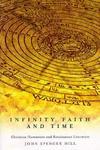
Infinity, Faith, and Time is an exploration of Renaissance literature and the importance of a powerful tradition of Christian-Platonist rational spirituality derived from St Augustine and Nicholas of Cusa. John Spencer Hill argues that this tradition had a formative role in the thought of Renaissance writers by enabling them to assimilate into their world view two central discoveries of the Renaissance - that the universe is infinite and that human existence is bound and regulated by the passage of time. In Part 1 Hill examines the effect of the idea of spatial infinity on seventeenth-century literature, arguing that the metaphysical cosmology of Nicholas of Cusa provided Renaissance writers, such as Pascal, Traherne, and Milton, with a way to construe the vastness of space as the symbol of human spiritual potential. Focusing on time in Part 2, Hill reveals that, faced with the inexorability of time, Christian humanists turned to St Augustine to develop a philosophy that interpreted temporal passage as the necessary condition of experience without making it the essence or ultimate measure of human purpose. Hill's analysis centres on Shakespeare, whose experiments with the shapes of time comprise a gallery of heuristic time-centred fictions that attempt to explain the consequences of human existence in time.
Book Details
| Book Name | Infinity, Faith, And Time: Christian Humanism And Renaissance Literature |
| Author | John Spencer Hill |
| Publisher | Mcgill-queen's University Press (Nov 1997) |
| ISBN | 9780773516618 |
| Pages | 216 |
| Language | English |
| Price | 5565 |