
Book Summary
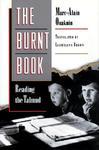
Marc-Alain Ouaknin offers a postmodern reading of the Talmud, one of the first of its kind. Combining traditional learning and contemporary thought, Ouaknin dovetails discussions of spirituality and religious practice with such concepts as deconstruction, intertextuality, undecidability, multiple voicing, and eroticism in the Talmud. On a broader level, he establishes a dialogue between Hebrew tradition and the social sciences, which draws, for example, on the works of Levinas, Blanchot, and Jabes as well as Derrida. The Talmud, transcribed in 500 C.E., is shown to be a text that refrains from dogma and instead encourages the exploration of its meanings. Examining its literary methods and internal logic, Ouaknin explains how this text allows readers to transcend its authority in that it invites them to interpret, discuss, and re-create their religious tradition. An in-depth treatment of selected texts from the oral law and commentary goes on to provide a model for secular study of the Talmud in light of contemporary philosophical issues. Throughout the author emphasizes the self-effacing quality of a text whose worth can be measured by the insights that live on in the minds of its interpreters long after they have closed the book. He points out that the burning of the Talmud in anti-Judaic campaigns throughout history has, in fact, been an unwitting act of complicity with Talmudic philosophy and the practice of self-effacement. Ouaknin concludes his discussion with the story of the Hasidic master Rabbi Nahman of Bratslav, who himself burned his life achievement - a work known by his students as "the Burnt Book". This story leaves us with the question, should all books be destroyed inorder to give birth to thought and renew meaning? In a profound look at what it means for new generations to read and interpret ancient religious texts, rabbi and philosopher Marc-Alain Ouaknin offers a postmodern reading of the Talmud, one of the first of its kind. Combining traditional learning and contemporary thought, Ouaknin dovetails discussions of spirituality and religious practice with such concepts as deconstruction, intertextuality, undecidability, multiple voicing, and eroticism in the Talmud. On a broader level, he establishes a dialogue between Hebrew tradition and the social sciences, which draws, for example, on the works of Levinas, Blanchot, and Jabes as well as Derrida. "The Burnt Book represents the innovative thinking that has come to be associated with a school of French Jewish studies, headed by Levinas and dedicated to new readings of traditional texts, which is fast gaining influence in the United States. The Talmud, transcribed in 500 C.E., is shown to be a text that refrains from dogma and instead encourages the exploration of its meanings. A vast compilation of Jewish oral law, the Talmud also contains rabbinical commentaries that touch on everything from astronomy to household life. Examining its literary methods and internal logic, Ouaknin explains how this text allows readers to transcend its authority in that it invites them to interpret, discuss, and re-create their religious tradition. An in-depth treatment of selected texts from the oral law and commentary goes on to provide a model for secular study of the Talmud in light of contemporary philosophical issues. Throughout the author emphasizes the self-effacing quality of a text whose worth can be measured by the insights that live on in the mindsof its interpreters long after they have closed the book. He points out that the burning of the Talmud in anti-Judaic campaigns throughout history has, in fact, been an unwitting act of complicity with Talmudic philosophy and the practice of self-effacement. Ouaknin concludes his discussion with the story of the Hasidic master Rabbi Nahman of Bratslav, who himself burned his life achievement--a work known by his students as "the Burnt Book." This story leaves us with the question, should all books be destroyed in order to give birth to thought and renew meaning?
Book Details
| Book Name | The Burnt Book: Reading The Talmud |
| Author | Marc-alain Ouaknin, Llewellyn Brown |
| Publisher | Princeton University Press (Jul 1995) |
| ISBN | 9780691037295 |
| Pages | 272 |
| Language | English |
| Price | 3120 |